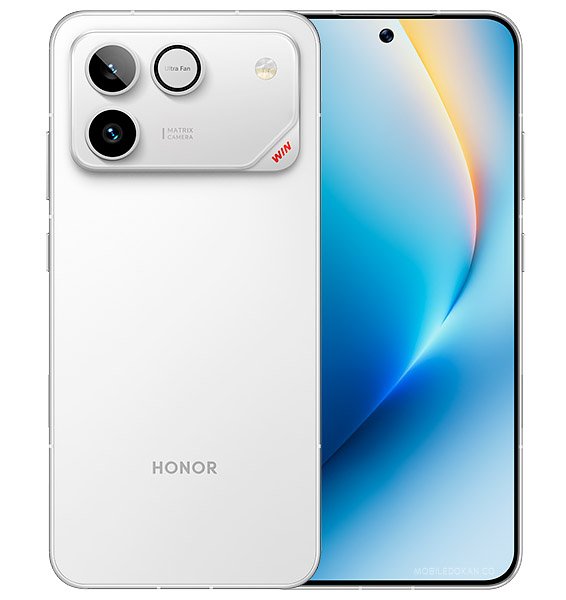

Apple’s first foldable iPhone combines a 7.6-inch inner display and 5.4-inch cover screen with A20 Pro performance, dual 48MP cameras and a $1,999 U.S. starting price.
- The iPhone Duo opens to a 7.6-inch folding OLED and adds a 5.4-inch outer OLED; both support ProMotion up to 120Hz and 3,000-nit outdoor brightness.
- Apple pairs the A20 Pro with a 6-core CPU, 7-core GPU and dual 16-core Neural Engine for iOS 27 multitasking and on-device intelligence.
- The rear camera system uses 48MP Main and 48MP Ultra Wide sensors, while video reaches 4K Dolby Vision at 120 fps on the Main camera.
- U.S. pricing starts at $1,999. Preorders open October 16, 2026, before availability on October 23.
Apple iPhone Duo at a glance
The iPhone Duo is Apple’s first foldable iPhone, designed to work as a compact handset when closed and a tablet-like device when opened. Apple announced it on September 9, 2026, with U.S. preorders scheduled for October 16 and general availability on October 23.
The defining hardware is a pair of high-refresh-rate OLED screens: a 5.4-inch outer display for everyday phone tasks and a 7.6-inch folding inner display for reading, editing, gaming and split-screen work. The phone also introduces Apple’s A20 Pro platform to the foldable format, alongside two 48MP rear cameras, iOS 27 and Apple Pencil USB-C support.
It is positioned above conventional flagships, starting at $1,999 in the United States. Buyers comparing Apple’s newest form factor with a large traditional handset can also see our iPhone 18 Pro Max specifications.
Key specifications
| Feature | Apple iPhone Duo specification |
|---|---|
| Inner display | 7.6-inch Super Retina XDR folding OLED, 1878 × 2670, 430 ppi, ProMotion up to 120Hz |
| Outer display | 5.4-inch Super Retina XDR OLED, 1398 × 2034, 460 ppi, ProMotion up to 120Hz |
| Chip | A20 Pro; 6-core CPU; 7-core GPU; dual 16-core Neural Engine |
| Rear cameras | 48MP Fusion Main + 48MP Fusion Ultra Wide |
| Front cameras | 12MP Center Stage outer camera + under-display FaceTime inner camera |
| Battery claim | Up to 44 hours video on the outer display or 31 hours on the inner display |
| Charging | About 50% in 20 minutes wired; MagSafe and Qi2 up to 25W |
| Dimensions | Open: 164.6 × 117.8 × 5.2mm; closed: 84.1 × 117.8 × 11.3mm |
| Weight | 254g |
| Storage | 256GB, 512GB, 1TB or 2TB |
| Software | iOS 27 |
| U.S. price and date | From $1,999; available October 23, 2026 |
These figures are Apple’s published specifications and claims. Actual battery life and charging time will vary with configuration, accessories, network conditions and use.
Foldable design, dimensions and durability
When opened, the iPhone Duo measures 164.6mm tall, 117.8mm wide and 5.2mm thick. Folded, it is 84.1mm wide and 11.3mm thick. The 254g weight makes it substantially heavier than a standard slab phone, so the smaller closed footprint does not mean a lighter device.
Apple uses Grade 5 titanium for the frame and hinge cover, with Ceramic Shield on the front and back. The published IP68 rating covers dust resistance and water resistance under Apple’s test conditions. As with any foldable, owners should still keep grit away from the hinge and treat the flexible inner screen with more care than conventional cover glass.
Night Sky and Star White are the two launch colors. The subdued finish choices fit the premium positioning, while the side-mounted Touch ID sensor keeps authentication accessible whether the phone is open or closed.
Two ProMotion OLED displays
The inner panel is a 7.6-inch Super Retina XDR folding OLED with a 1878 × 2670 resolution and 430 pixels per inch. The 5.4-inch outer screen uses a 1398 × 2034 OLED panel at a denser 460 ppi. Both can refresh at up to 120Hz through ProMotion and are rated for up to 3,000 nits of outdoor brightness.
The cover display should handle messages, navigation, calls and quick camera use without requiring the phone to be unfolded. Opening the device provides more room for documents, web pages, media and multitasking. Apple Pencil USB-C support is especially relevant on the larger canvas, although the stylus remains an optional accessory rather than an included part of the phone.
The foldable screen will still have a physical crease and a softer top layer than a conventional iPhone display. Those are practical tradeoffs buyers should weigh against the extra workspace.
A20 Pro performance and iOS 27
The A20 Pro combines a 6-core CPU, 7-core GPU with Neural Accelerators and dual 16-core Neural Engine. Apple has not published a cross-platform benchmark guarantee, but this is its flagship-class silicon package for demanding apps, graphics and on-device machine learning.
iOS 27 is adapted to the dual-screen form factor. The wider inner display is the main reason to choose the Duo: it can show more information at once and reduce the need to jump between apps. The outer screen remains available for simpler one-handed tasks.
Storage begins at 256GB and scales through 512GB, 1TB and 2TB. There is no memory-card slot, so buyers who record a lot of 4K video or keep large offline libraries should select capacity with several years of use in mind. For context on Apple’s recent non-folding experience, our iPhone 17 Pro Max review covers the strengths and limits of the familiar large-screen design.
Dual 48MP rear cameras
The rear camera system consists of a 48MP Fusion Main camera and a 48MP Fusion Ultra Wide. Apple does not list a separate dedicated telephoto module in the official specification, so shoppers who prioritize long optical zoom should not assume that the Duo mirrors every Pro Max camera capability.
The Main camera is the primary option for general photography and low-light work, while the Ultra Wide captures broader scenes and close perspectives. The folding design also makes the rear cameras easier to use for self-framing: the outer screen can provide a preview while the higher-quality rear sensors point toward the subject.
There are two front-facing approaches. A 12MP Center Stage camera sits on the outside, and an under-display FaceTime camera serves the inner screen. The hidden inner camera preserves an uninterrupted large canvas, although under-display optics typically involve different image-quality compromises than a conventional cutout camera.
Video recording
Apple lists video recording up to 4K Dolby Vision at 120 frames per second on the Fusion Main camera. That ceiling gives creators flexibility for high-resolution slow motion, but it also produces large files and can increase heat and battery consumption during extended recording.
USB-C supports USB 3 transfer rates up to 10Gb/s and DisplayPort output, which is useful for moving footage to external storage or a computer. A compatible cable and destination device are required to achieve the maximum transfer speed.
Battery life and charging
The iPhone Duo uses a dual-battery arrangement. Apple rates it for up to 44 hours of video playback when using the outer display, or up to 31 hours on the inner display. The difference reflects the greater power demand of the larger folding panel.
Apple says a compatible wired setup can charge the battery to around 50% in approximately 20 minutes. MagSafe and Qi2 wireless charging reach up to 25W with compatible equipment. Charger output, temperature, background activity and the starting battery level all affect real-world results, so the quoted figures should be treated as controlled-test guidance rather than a guarantee.
Connectivity, eSIM and security
Connectivity includes 5G, Wi-Fi 7, Bluetooth 6, Thread, NFC and second-generation Ultra Wideband. The USB-C port supports data, charging and DisplayPort video output. The phone is dual-eSIM only and does not accept a physical SIM card, an important limitation for travelers whose preferred carrier has weak eSIM support.
Touch ID is integrated into the side button instead of relying on Face ID. That placement works in both folded and unfolded positions. Buyers should confirm carrier activation, emergency-service support and roaming compatibility for the exact market where they plan to use the phone.
Price, storage and release date
Apple’s U.S. store lists the iPhone Duo from $1,999 before trade-in credits, taxes or carrier promotions. Storage options are 256GB, 512GB, 1TB and 2TB. Apple announced the phone on September 9, 2026; U.S. preorders open October 16, with availability beginning October 23.
Pricing, color selection, carrier support and launch dates can differ by country. The confirmed launch colors are Night Sky and Star White. Readers following the rest of Apple’s 2026 lineup can compare these details with our earlier iPhone 18 series coverage, while keeping in mind that pre-release expectations can differ from final specifications.
Who should consider the iPhone Duo?
The Duo is aimed at buyers who value a pocketable phone that can become a larger reading and work surface. Its strongest reasons to upgrade are the 7.6-inch inner display, flagship A20 Pro platform, high-capacity storage choices and integration with Apple’s software and accessory ecosystem.
The compromises are equally clear: a $1,999 starting price, 254g weight, 11.3mm folded thickness, no physical SIM and no listed dedicated telephoto camera. Foldable-screen care is another consideration. Anyone who mainly uses one app at a time may get better value from a standard iPhone, while frequent travelers should verify eSIM coverage before ordering.
Verdict
On paper, the Apple iPhone Duo specifications make it a serious first-generation foldable rather than a small-screen experiment. Both displays offer 120Hz ProMotion and high outdoor brightness, while the A20 Pro, dual 48MP cameras and up to 2TB of storage support demanding use.
Its appeal depends on whether the larger inner workspace justifies the premium price and added weight. The published hardware is competitive, but long-term hinge behavior, crease visibility, sustained performance and real battery life will need independent testing after retail availability. For now, the Duo is best viewed as Apple’s most flexible iPhone—and one that asks buyers to accept the familiar costs of an early premium foldable.