What is Google Gemini Lyria 3 AI Music Generator?
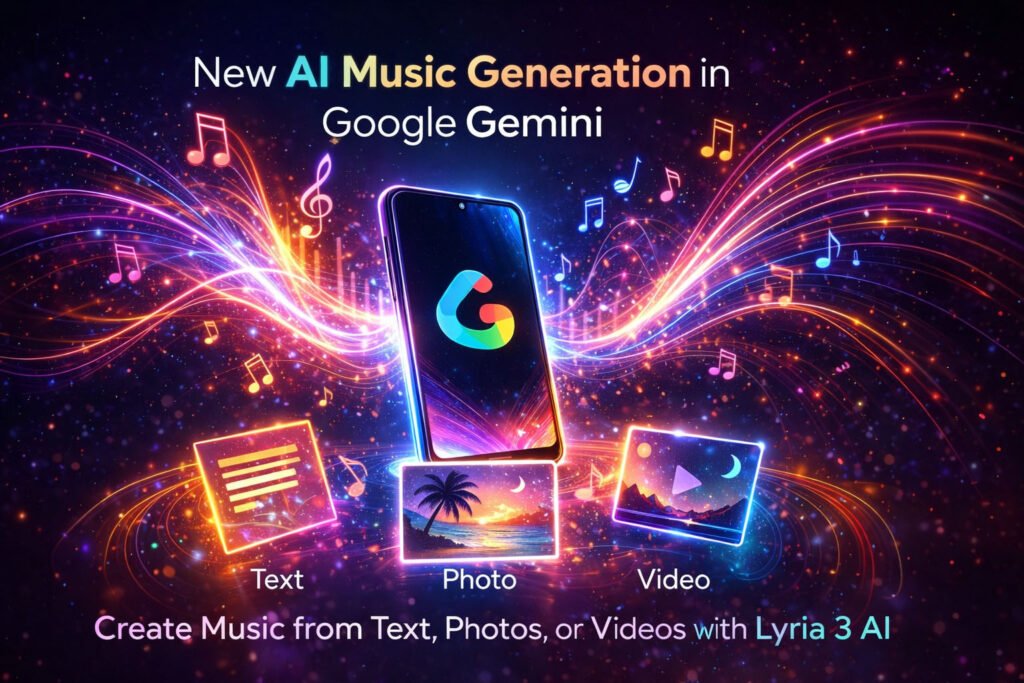
Google Gemini Lyria 3 AI Music Generator has officially launched, introducing a powerful new AI music creation system inside the Gemini app. With the integration of Lyria 3, users can now generate 30-second original songs using simple text prompts, images, or even video clips.
🎶 Google Gemini Launches Lyria 3 AI Music Generation: Create Custom Songs from Text, Images, or Videos
Google has taken a major leap in creative AI with the rollout of Lyria 3, its most advanced music generation model, now integrated directly into the Gemini app. This new feature allows users to generate original 30-second music tracks, complete with instrumentals, vocals, and lyrics — all from simple text prompts or by uploading photos and videos.
The capability is currently available in beta within the Gemini app for users aged 18 and older, marking a significant expansion of Google’s generative AI portfolio beyond text and image creation into music composition.
🎤 What Is Lyria 3? The Next Generation of AI Music
Lyria 3 is the newest music generation model developed by Google DeepMind, designed to produce expressive and coherent music pieces from natural language descriptions. By entering a prompt like “jazzy beats with soulful vocals inspired by a rainy night,” users can instantly generate custom tracks that match the mood and style described.
Unlike earlier iterations, Lyria 3 automatically writes lyrics based on the initial prompt and offers users additional control over the style, tempo, and vocals of the generated track. This improvement makes the model significantly more musically sophisticated and flexible.
The feature also supports multiple languages, including English, German, Spanish, French, Hindi, Japanese, Korean, and Portuguese, and it is accessible to free-tier and subscription users alike, though higher usage limits may apply for premium subscribers.
🧠 How It Works: Text, Images, or Video to Music
Google’s implementation of Lyria 3 in the Gemini app is notably multimodal. This means users can:
✅ Type a text prompt asking for a specific vibe, genre, or emotional tone.
✅ Upload a photo or even a video clip and have the AI extract visual mood cues to generate a soundtrack to match.
✅ Receive a fully composed 30-second track with accompanying custom cover art created by Google’s Nano Banana image model.
The generated tracks are intended for creative expression — whether crafting a personalized birthday jingle or adding background music to a short video — rather than professional music production.
The Google Gemini Lyria 3 AI Music Generator uses DeepMind’s advanced multimodal model to compose music based on user input.
💡 Creative Use Cases and Shareability
This feature expands AI creativity options for everyday users, educators, social media creators, and hobbyists. Examples of use cases include:
- 🎥 Soundtracking videos for platforms like YouTube Shorts or TikTok
- ✉️ Personalized musical greetings or short themed tracks
- 🎧 Mood music for stories, presentations, or digital storytelling
Because Gemini outputs cover art with each track, users can download and share their creations on social media, messaging apps, or embed them directly within other content.
Google is also integrating this music generation technology into tools like YouTube’s Dream Track, enabling creators to further customize soundtracks for short-form content.
🛡️ Responsible AI: Watermarking and Verification
To address concerns about transparency and originality in AI-generated audio, each track created with Lyria 3 contains a hidden watermark generated by SynthID, Google’s content identification technology. This marker confirms that a track was produced by AI and helps curb misuse or confusion around human-generated works.
Gemini also plans to offer tools that let users verify whether a track was AI-generated by submitting it for analysis using the same SynthID watermarking system.
Google emphasizes that Lyria 3 is designed for original expression rather than copying existing artists, so prompts that mention specific artist names will be interpreted as inspiration for style rather than direct imitation.
🌍 Accessibility and Availability
The Lyria 3 music generation feature is rolling out globally within the Gemini app, beginning with support for major languages and expanding over time. It is currently live for desktop users and will soon reach mobile devices, offering broader access to those looking to experiment with AI-generated sound.
While still in beta, this addition signals Google’s commitment to making creative AI tools more user-friendly and accessible, enabling anyone — even without musical training — to innovate with sound.
🔍 What This Means for the Future of AI and Music
Google’s integration of Lyria 3 into Gemini could reshape how people approach music creation:
🎵 Lowering barriers to entry for music production
📲 Blending multimodal AI tools — text, photos, video, and audio generation in one platform
⚖️ Responsible AI deployment with watermarking and originality filters
By embedding music generation within an existing AI assistant, Google brings creative AI to millions, making it easier than ever to turn ideas into audio experiences.
Google’s introduction of Lyria 3 music generation in the Gemini app marks a milestone in AI-assisted creative tools. It enables users to generate original music from text, images, and videos, complete with lyrics and cover art, while prioritizing responsible use and transparency. Whether for casual sharing or enhancing digital content, this new feature opens up fresh possibilities in the intersection of AI and creativity. With the launch of the Google Gemini Lyria 3 AI Music Generator, Google is expanding its AI ecosystem beyond text and images into creative audio production.
Category: Technology News | Artificial Intelligence