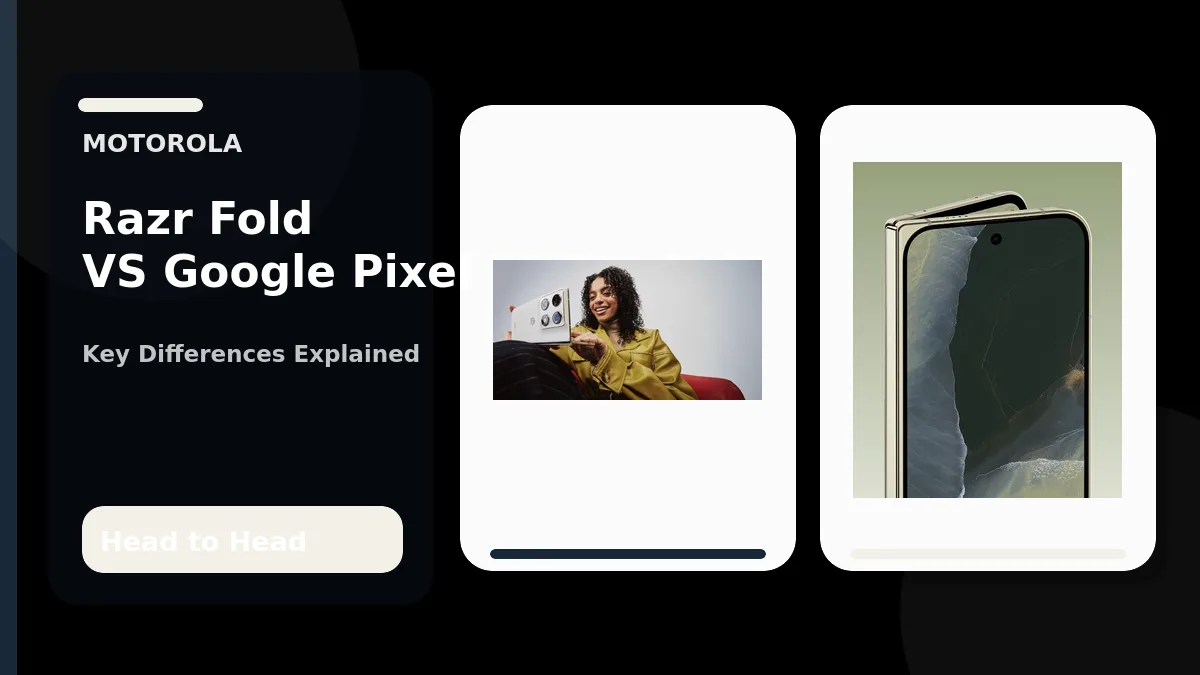
- The Razr Fold has the stronger on-paper power package: a 6,000mAh battery and 80W TurboPower charging.
- Google gives the Pixel 11 Pro Fold 16GB of RAM, Tensor G6, IP68 protection and up to 25W Qi2.2 wireless charging.
- Motorola claims an 8.1-inch 2K inner display with 6,200-nit peak brightness; Google says both Pixel displays reach 3,600 nits.
- The camera priorities differ: Motorola stresses high-resolution wide and ultrawide sensors, while Google adds a telephoto camera with up to 30x Super Zoom.
- Regional price and availability should be checked locally; this comparison does not invent missing launch-market details.
Quick comparison
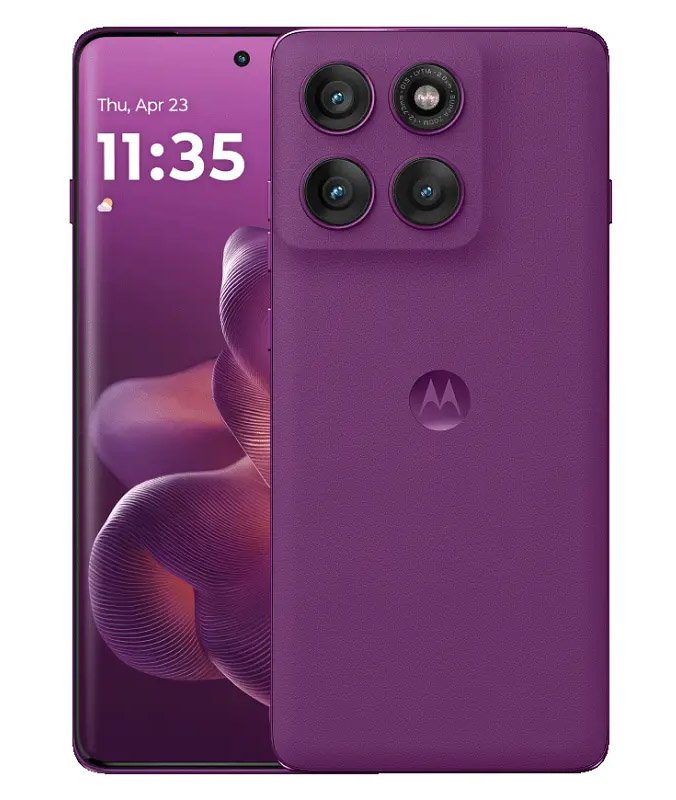
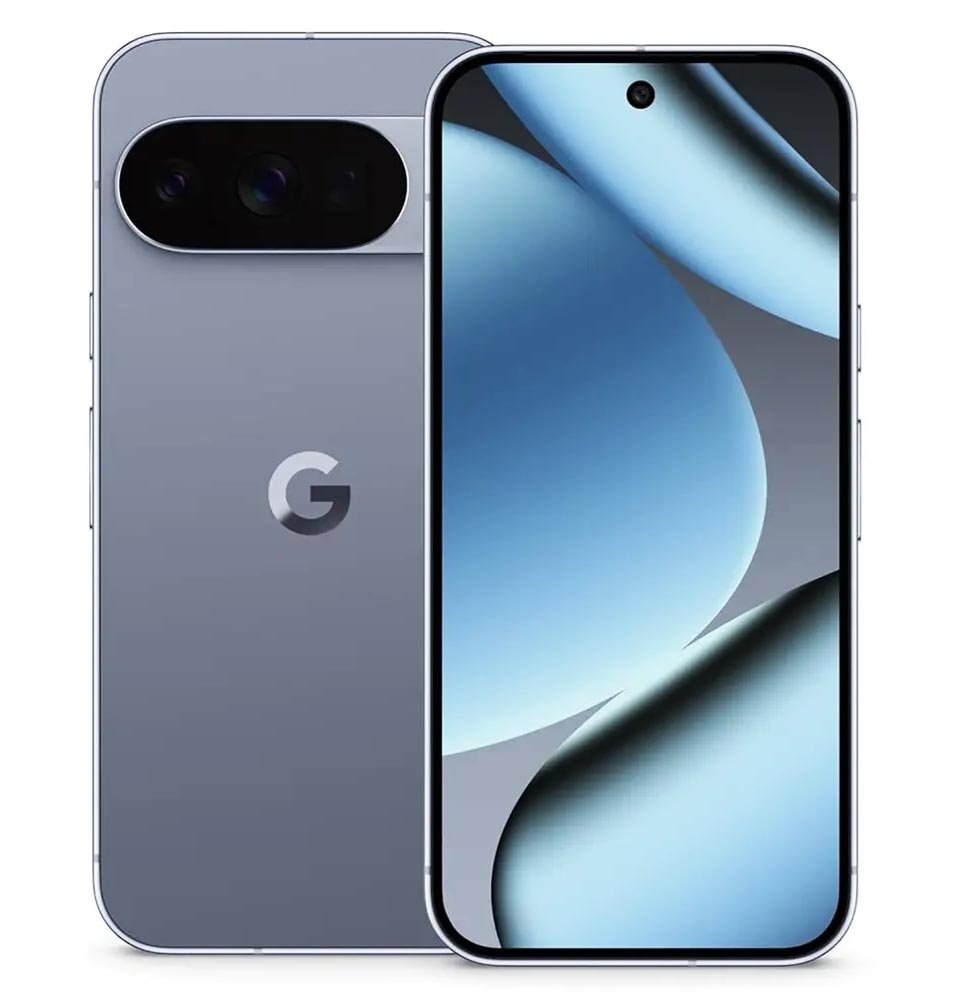
The Motorola Razr Fold vs Google Pixel 11 Pro Fold decision is unusually clear when judged by the manufacturers’ own claims. Motorola concentrates on hardware scale: a brighter 8.1-inch inner display, a 6,000mAh battery, 80W charging, high-resolution cameras and optional pen input. Google’s foldable focuses on a lighter chassis, strong durability protections, Tensor-powered software, 16GB of RAM, Qi2.2 charging and a dedicated telephoto camera.
| Feature | Motorola Razr Fold | Google Pixel 11 Pro Fold |
|---|---|---|
| Form factor | Book-style foldable | Book-style foldable |
| Main display | 8.1-inch, 2K, HDR10+ | Inner foldable display; size not stated in Google’s announcement |
| Claimed peak brightness | 6,200 nits | 3,600 nits on both displays |
| Processor | Snapdragon 8 Gen 5 | Google Tensor G6 |
| Memory | Numeric RAM not stated on the cited page | 16GB RAM |
| Main camera | 50MP Sony LYTIA 828 | New 48MP main camera |
| Other rear cameras | 50MP ultrawide with macro, 122° field of view | Telephoto with up to 30x Super Zoom |
| Selfie cameras | 20MP outer; 32MP inner | Front-camera support for foldable features; resolution not stated in the announcement |
| Battery | 6,000mAh | Over 24 hours claimed; capacity not stated |
| Wired charging | 80W TurboPower | 30W; 50% in about 30 minutes claimed |
| Wireless charging | Not specified on cited page | Up to 25W Qi2.2 |
| Durability highlight | Gorilla Glass Ceramic 3 | IP68, gearless hinge, ceramic outer-display glass |
| Productivity highlight | Three-app multitasking and Moto Pen Ultra | Split Screen, Drag and Drop, bubbles and sign-to-text |
The biggest differences
Motorola’s clearest advantages are the numbers it publishes for the display, battery and wired charging. The Razr Fold’s 6,000mAh cell is paired with 80W TurboPower charging, while its inner panel is listed at 8.1 inches with 2K resolution and a 6,200-nit peak claim. Google instead promises more than 24 hours of battery life, 30W wired charging and up to 25W Qi2.2 wireless charging.
The Pixel’s differentiators are less about maximum figures and more about the complete foldable experience: lower weight than its predecessor, IP68 protection, a redesigned gearless hinge, 16GB of RAM and Pixel-specific software. The result is not a universal winner; it is a choice between Motorola’s ambitious hardware and Google’s tightly integrated feature set.
Design and durability
Both are book-style foldables, but their official positioning differs. Motorola says the Razr Fold supports laptop, tent and rear-camera selfie modes. At 4.6mm when unfolded, it combines a slim body with PANTONE Blackened Blue or Lily White finishes. Gorilla Glass Ceramic 3 covers the exterior, and Motorola cites improved drop performance from internal testing.
Google says the Pixel 11 Pro Fold is almost 10% lighter and roughly 1mm thinner than the previous Pixel Fold. Its glass-fiber composite back, gearless hinge and ceramic outer-display cover are paired with an IP68 dust- and water-resistance rating. Google also claims three-times-better durability than the prior generation, but that is a manufacturer comparison, not an independent torture test.
Display and multitasking
The Razr Fold has the more aggressive display specification on paper. Motorola lists an 8.1-inch 2K main screen with HDR10+, more than one billion colors and a claimed 6,200-nit peak. It can show as many as three apps at once, arranged side by side or stacked.
Google says both Pixel displays reach 3,600 nits and that the redesigned hinge improves crease performance. Its software supports Split Screen, Drag and Drop, Instant View and app bubbles optimized for the unfolded screen. Motorola offers more simultaneous panes; Google provides a mature set of Pixel-specific foldable interactions.
Performance and software
The Razr Fold uses Qualcomm’s Snapdragon 8 Gen 5 and includes liquid cooling. Motorola presents it as a platform for gaming, streaming and sustained multitasking, although the official page does not provide independent benchmark results or a numeric RAM configuration in the evidence used here.
The Pixel 11 Pro Fold combines Google Tensor G6 with 16GB of RAM. Google designs Tensor around its own AI and camera features, including Gemini assistance and enhanced Circle to Search. Raw speed cannot be declared from chipset names alone, so buyers who prioritize gaming should wait for controlled benchmark and thermal testing. For integrated AI and long-term Pixel feature delivery, Google has the more clearly documented software proposition.
Camera comparison
Motorola builds around a 50MP Sony LYTIA 828 main sensor and a 50MP ultrawide camera with Macro Vision and a 122-degree field of view. It also lists a 20MP external selfie camera and 32MP internal selfie camera. That combination is flexible for wide scenes, close-ups and video calls in either folded state.
Google’s announcement confirms a new 48MP main camera and a telephoto camera capable of up to 30x Super Zoom. Features such as Magic Capture and Camera Looks lean on Pixel processing. The Razr Fold looks stronger for ultrawide resolution and clearly documented selfie hardware; the Pixel is the more obvious choice for long-range framing because Motorola does not list an equivalent telephoto claim on the cited product page.
Battery and charging
This is Motorola’s strongest category. The Razr Fold has a stated 6,000mAh silicon-carbon battery and 80W TurboPower charging. Motorola claims that a short charge can add more than 12 hours of power, though real results will depend on charger, temperature, network and workload.
Google does not state battery capacity in its announcement, but claims more than 24 hours of use. Its 30W wired system is said to reach 50% in about 30 minutes with Google’s compatible charger. Built-in Qi2.2 supports up to 25W wireless charging. Choose Motorola for maximum stated capacity and wired speed; choose Google if fast magnetic wireless charging matters.
Productivity and accessibility
The Razr Fold supports Moto Pen Ultra with pressure sensitivity and palm rejection. Together with three-app multitasking, that gives it a meaningful advantage for handwritten notes, annotation and dense split-screen workflows. See our complete Motorola Razr Fold specifications for the device-focused breakdown.
Google’s strengths are collaboration and accessibility. Pixel 11 Pro Fold adds sign-to-text translation designed with the Deaf community, alongside foldable tools such as Split Screen, bubbles and Drag and Drop. Our Pixel 11 Pro Fold versus Galaxy Z Fold8 Ultra comparison shows how the same Google software package compares with Samsung’s premium foldable.
Price and availability
Google announced the Pixel 11 Pro Fold on August 12, 2026, opened pre-orders that day and scheduled retail availability for August 20. Availability and offers vary by market. Motorola’s U.S. product page documents the Razr Fold hardware but the accessible evidence used for this comparison does not provide a reliable launch price or universal sale date.
That missing information matters. A specification win can disappear if one model is unavailable locally, lacks preferred carrier support or costs substantially more. Compare the final regional prices, warranty terms, storage options and included charger before ordering.
Winner by category
- Display specification: Motorola, for the larger documented 8.1-inch 2K panel and higher peak-brightness claim.
- Battery and wired charging: Motorola, with 6,000mAh and 80W.
- Wireless charging: Google, with built-in Qi2.2 at up to 25W.
- Zoom photography: Google, thanks to its documented telephoto camera and 30x Super Zoom.
- Stylus productivity: Motorola, because Moto Pen Ultra support is explicit.
- Dust and water protection: Google, with an official IP68 rating.
- Software and accessibility: Google, for Pixel foldable tools and sign-to-text.
These verdicts compare confirmed features, not laboratory performance. Neither phone receives a blanket camera or performance win without controlled testing.
Which foldable should you buy?
Buy the Motorola Razr Fold if your priorities are the biggest documented inner screen, rapid wired charging, long on-paper battery capacity, multitasking across three apps and pen input. Its camera hardware also looks versatile for ultrawide, macro and selfie use.
Buy the Google Pixel 11 Pro Fold if you want IP68 protection, Qi2.2 wireless charging, 16GB of RAM, Pixel camera processing, a telephoto option and Google’s accessibility and AI features. Readers considering a conventional flagship can also review the Google Pixel 11 Pro specifications.
Final verdict
The Motorola Razr Fold vs Google Pixel 11 Pro Fold contest splits along practical lines. Motorola is the hardware-value choice on paper, especially for battery, wired charging, display brightness and stylus productivity. Google offers the more rounded ecosystem package, with IP68 protection, Qi2.2, a telephoto camera and Pixel-exclusive software.
There is no responsible overall winner until regional pricing and independent battery, camera and sustained-performance tests are available. Match the stronger category to your own use case, then verify local availability before buying.