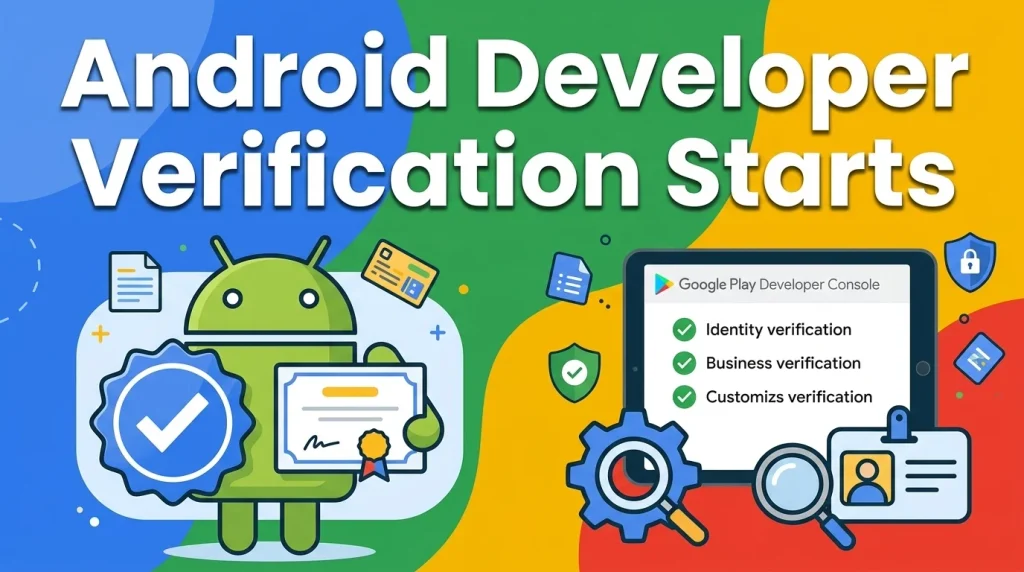
Android’s developer-verification enforcement begins September 30, 2026 for users in Brazil, Indonesia, Singapore and Thailand on certified Android devices. The first phase covers installations from seven participating app stores, including Google Play, Galaxy Store, GetApps and stores operated by HONOR, OPPO/OPlus, vivo and Transsion. It does not mean Android is ending sideloading: Google says unregistered apps can still be installed through Android Debug Bridge (ADB) or its advanced flow for power users.
What changes on September 30
- App registration becomes required for participating stores in Brazil, Indonesia, Singapore and Thailand.
- The requirement applies on certified Android devices; Google’s current developer page says the protection covers certified devices running Android 7 or later.
- The participating stores are Google Play, HONOR App Market, OPPO App Market, Samsung Galaxy Store, Transsion Palm Store, vivo V-Appstore and Xiaomi GetApps.
- Google says more than 99% of Google Play apps have already been registered automatically.
- Apps from unverified developers are not universally blocked: ADB and the advanced installation flow remain available.
- Google plans a broader global rollout in 2027.
September 30 rollout at a glance
| Item | Verified detail |
|---|---|
| Enforcement date | September 30, 2026 |
| Initial countries | Brazil, Indonesia, Singapore and Thailand |
| Devices | Certified Android devices; Google’s current documentation specifies Android 7 or later for this rollout |
| Participating stores | Google Play, HONOR App Market, OPPO App Market, Galaxy Store, Palm Store, V-Appstore and GetApps |
| Unregistered apps | ADB and Google’s advanced flow remain installation options |
| Wider rollout | Planned globally during 2027 and beyond |
What developer verification actually checks
The policy is about developer identity and app registration, not a blanket Google review of every app’s content. Google describes the system as an accountability layer intended to make it harder for malicious actors to repeatedly distribute harmful apps under new identities. Developers register their identity and package names so Android can determine whether an app is associated with a verified developer.
For Google Play developers, Google says eligible apps have largely been registered automatically. Developers should still check Play Console because any remaining unregistered Play apps need registration by September 30 to avoid removal from Google Play and installation problems. Developers distributing only outside Google Play can use Android Developer Console.
Does this end Android sideloading?
No. Google’s June 18 update explicitly preserves two routes for unregistered apps: ADB and an advanced flow intended for power users. Google’s March announcement likewise says power users retain a way to install apps from any source. The practical change is that ordinary installation of an unregistered package becomes more restricted on covered certified devices in the first four countries.
This distinction matters because “developer verification” and “Google Play-only installation” are not the same policy. Alternative stores can participate, and developers can register apps distributed outside Google Play.
Which phone brands and app stores are involved?
The initial store list spans several major Android ecosystems. Samsung’s Galaxy Store, Xiaomi’s GetApps, HONOR App Market, OPPO App Market, vivo V-Appstore and Transsion’s Palm Store join Google Play in the first phase. Google describes this as an industry-wide effort rather than a Play Store-only rule.
PhoneSpecX readers following Android software changes may also want our Samsung One UI 9 rollout roadmap. For another current example of Android ecosystem integration across services, see our coverage of Samsung Gallery’s Google Photos sync change.
What developers should do before the deadline
Google Play developers should review the Android developer verification area in Play Console and register any app that was not registered automatically. Developers distributing apps only outside Google Play should use Android Developer Console to verify and register their packages. Google also provides limited-distribution accounts for students, hobbyists and learners, designed for sharing apps with up to 20 devices without a government-issued ID or fee.
Developers who distribute the same package through multiple channels should verify the package registration status rather than assuming Play registration automatically covers every distribution scenario. Google’s documentation should be treated as the authoritative source because implementation details can change as the rollout expands.
What users in the four countries should expect
For most people installing mainstream apps from participating stores, Google says the experience should remain largely unchanged because the overwhelming majority of Play apps are already registered. The difference becomes visible when a user attempts to install an app whose developer or package is not registered under the new system.
The September 30 date is an initial regional enforcement point, not the end of the rollout. Google plans to expand verification globally in 2027, after incorporating feedback from the first phase.
FAQs
When does Android developer verification enforcement begin?
The first regional enforcement begins September 30, 2026 in Brazil, Indonesia, Singapore and Thailand.
Will Android block all sideloaded apps?
No. Google says unregistered apps can still be installed through ADB or its advanced flow for power users. The new requirement changes the normal installation path on covered certified devices rather than eliminating every sideloading method.
Which app stores are included first?
Google Play, HONOR App Market, OPPO App Market, Samsung Galaxy Store, Transsion Palm Store, vivo V-Appstore and Xiaomi GetApps are listed for the initial rollout.
Will the verification requirement expand worldwide?
Yes. Google says it plans to expand the protection globally across certified Android devices in 2027 and beyond.